
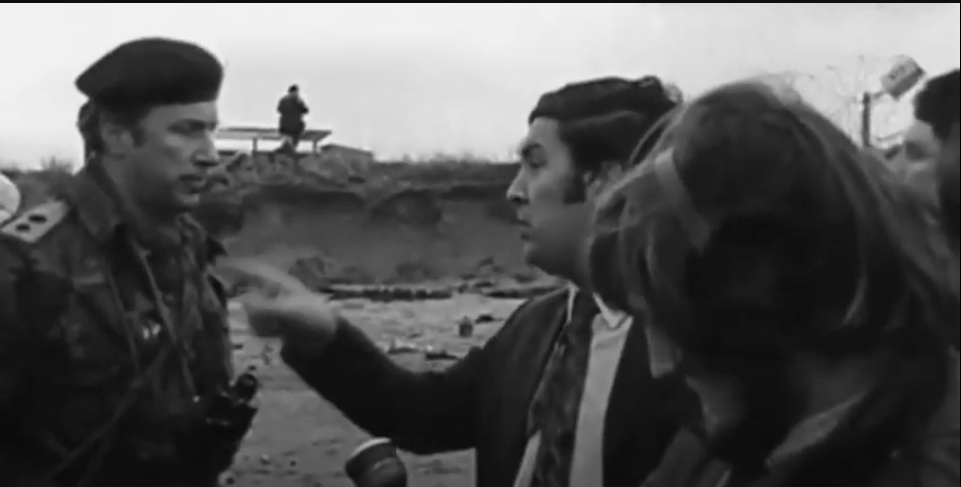
In a 1989 essay in the London Review of Books, John Hume wrote that, “the fundamental change that has taken place as a result of the Anglo-Irish Agreement is a change that is deeply and fully understood by every Unionist. What it means is that their exclusive hold on power has gone and is not coming back. The power of veto on British policy which they have always had, and which goes to the heart of our problem here, has gone and is not coming back.”
Such was the significance of this statement that Hume felt the need to say it twice in his essay and perhaps it is bears repeating a few times more today, over 34 years later, so that those who currently govern Ireland and Britain are left in no doubt: The unionist veto is gone and is not coming back.
Over the past two weeks, the great and the good have come together to extol the virtues of the Good Friday Agreement (GFA) on its 25th anniversary, lauding the courage and vision of the people who helped to usher in a new era of relative peace in the north of Ireland. Hume and others are now routinely held up by modern-day politicians and political commentators in Ireland as heroes for the roles they played. Hume was awarded the Nobel Peace Prize along with David Trimble and his legacy is such that he was subsequently voted the greatest person in the history of Ireland in a 2010 poll conducted by RTÉ (he topped the poll ahead of Michael Collins, Mary Robinson, James Connolly and… Bono.)
However, while the personalities who came together during those fraught days have been celebrated in the intervening years, the agreement itself has been under sustained attack during that time – and not only from those who were always vehemently opposed to it. There is a determined cohort of senior politicians scattered through Fianna Fáil and Fine Gael who repeatedly undermine the GFA by trashing fundamental components of it, too.
Though it is frequently heralded as a triumph of “constructive ambiguity”, there is no great mystery about the GFA either. It’s only 35 pages long. Indeed, there are aspects of the agreement which are actually, believe it or not, quite unambiguous. One of those is the part specifically related to a peaceful, democratic route to Irish unity: the border poll provisions. Effectively, what is enshrined in the agreement is the idea that constitutional change – in other words, Irish reunification – cannot happen without the express will of a majority of voters in the north. This is what is known as the “principle of consent”, acceptance of which, it must be remembered, was a serious point of contention within the republican movement back in 1998. Indeed, as the author and political scientist Marisa McGlinchey has said, in signing up to the GFA, Sinn Féin “overturned a fundamental ideological rock upon which Irish republicanism had historically rested.” It was also, lest it be forgotten, a unionist demand.
Political unionism is currently in crisis and fundamentalist figures parroting jaded ‘never, never’ rhetoric have somehow managed to paralyse the leadership by framing post-Brexit arrangements into a sort of Judgement Day battlefield for the union. The biggest issue, as they see it, is still the GFA and they are brazenly wrangling for a perpetual veto by attempting to warp the principle of consent into the principle of unionist consent. The goal, as far as the fundamentalists are concerned, is to secure the union “at all costs”, so bad faith is now the order of the day and it is not in the least bit surprising when you consider that one of Jeffrey Donaldson’s closest allies in recent years has repeatedly admitted to anyone who will listen that he is “a unionist before [he is] a democrat.” Ian Paisley Jr has taken up the baton and says “the enemy is at the gates”! These are the words of fundamentalist reactionaries, snarling in the face of change, who are gripped by existential angst and lashing out with inflammatory rhetoric.
There is no unionist veto on constitutional change within the GFA, though. So it is bemusing, 25 years later, to hear senior Irish politicians effectively espousing a unionist veto on democracy in Ireland. Instead of referring to the democratic mechanism of the GFA – that when a majority of people in the north vote for unity, so be it – and expecting that to be accepted in good faith as agreed 25 years ago, we have senior politicians, ex Taoisigh and influential national newspaper columnists denigrating the very concept. Fianna Fáil leader and former Taoiseach Micheál Martin has spoken of “majoritarian” (read, basic democratic) politics in concerned tones, while another former Taoiseach, ex-Fine Gael leader John Bruton, is suddenly worried about securing minority consent, writing in the Sunday Independent that, “simple majoritarianism isn’t enough”. This position, which is at odds with pro-GFA parties in the north, is designed to give succour to unionists, but it simply serves to embolden anti-democratic unionist fundamentalists, while also vindicating the long-held analysis of anti-GFA republicans that the GFA would not be a path to unity.
For anyone seeking to win a border poll on the question of Irish reunification, it goes without saying that they wish to win it with as big a majority as possible, but, as SDLP leader Colum Eastwood said in 2020, “the raw mechanism is 50 per cent plus one, because there’s no other way to do it, there just isn’t. We can’t say that someone’s vote is worth more.” Mr Bruton, Mr Martin and the DUP should heed this: as John Hume told us as far back as 1989, the unionist veto over Irish politics is gone and it isn’t coming back. The Good Friday Agreement was hard won and is much too important to be reneged on in order to suit anti-agreement agitators and partitionists who fear change. It is high time to embrace democracy in Ireland.

