It is not very often that I find myself in agreement with Peter Hitchens, but when it comes to rebuking fevered hawks, warmongers and unduly smug armchair generals, he tends to hit the nail squarely on the head. It undoubtedly helps that Hitchens has actually seen the fires of hell with his own eyeballs and tasted the corrosive air of death drifting through the ruins of freshly crushed cities.
Recalling his experience working as a journalist in Mogadishu during the Somali Civil War in a recent column, Hitchens observes that, “Civilisation is terribly precarious, a thin crust on top of a jealous, powerful chaos, as ready to break out as weeds are to infest and choke a well-tended garden as soon as its owner ceases to care for it.”
He explains how he and his colleagues were reliant on AK-47-toting child soldiers to escort them safely through the crumbling remains of a place where cafes, banks and clean, safe boulevards once existed.
Chaos happened to me, though it was my fault, because I sought it out. I arrived at a ruined airport as the sun set over Africa. This was Mogadishu, capital of Somalia in the middle of a civil war and a famine.
The Russian cargo plane slowed, halted, and turned off its engines. A profound silence fell.
Night was not far away. There was no immigration desk, there were no customs, just a bunch of 14-year-olds with AK-47s (I remember they had blue plastic stocks) who knew enough English to ask me and my companion, the brilliant photographer John Downing, ‘You want bodyguard?’ and to name a price in dollars. Dollars were almost the only useful thing we had brought with us, as it turned out.
An American fixer for one of the news agencies, waiting to pick up cargo from the same plane, was the only person we could ask. Should we hire these teenagers? ‘Oh yes’, he said mildly, ‘You’ll be dead and stripped naked by morning if you don’t have any armed protection. They’re probably good kids’. They were, or I wouldn’t be writing this.
In places like Ireland and the West generally, people can be guilty of taking the luxuries of everyday life for granted. Despite the fact that The Troubles are only a generation behind us and the ubiquitous coverage of carnage in places such as Gaza and Ukraine, fatal military conflict and societal destruction remain terrifyingly abstract.
Hitchens’ column arguably veers a little into the territory of scaremongering (he cites the brief blackout in Spain and Portugal as an example of how close we are to collapse), but it nevertheless contains a fundamental truth: if any of those who fiendishly advocate for increased militarism ever actually considered how they would fare in a warzone, they wouldn’t be so cool about calling for more taxpayers’ money to be spent on machines designed to mercilessly maim, kill and destroy.
Polar bear walks into a bar…
I recently came across a story on the BBC website that was originally published a few years ago detailing how a small Russian village had been ‘invaded’ by hungry polar bears. Wildlife photographer Dimitry Kokh captured a series of disturbingly absurd images depicting polar bears peering out from the broken windows of abandoned houses and wandering around what had previously served as an Arctic weather station.
Describing the work on his website, Kokh writes:
“I think that these images of the polar bears on Kolyuchin island are very timely, they are like snapshots of a premonition reflecting what could be in our not-so-distant future. The world as we know it is very fragile, and the current state of the world – from political conflicts and nuclear tension to the climate crisis – means that the end could very well be nigh. These things are real, and if they continue as they are, the outcome will be catastrophic. “
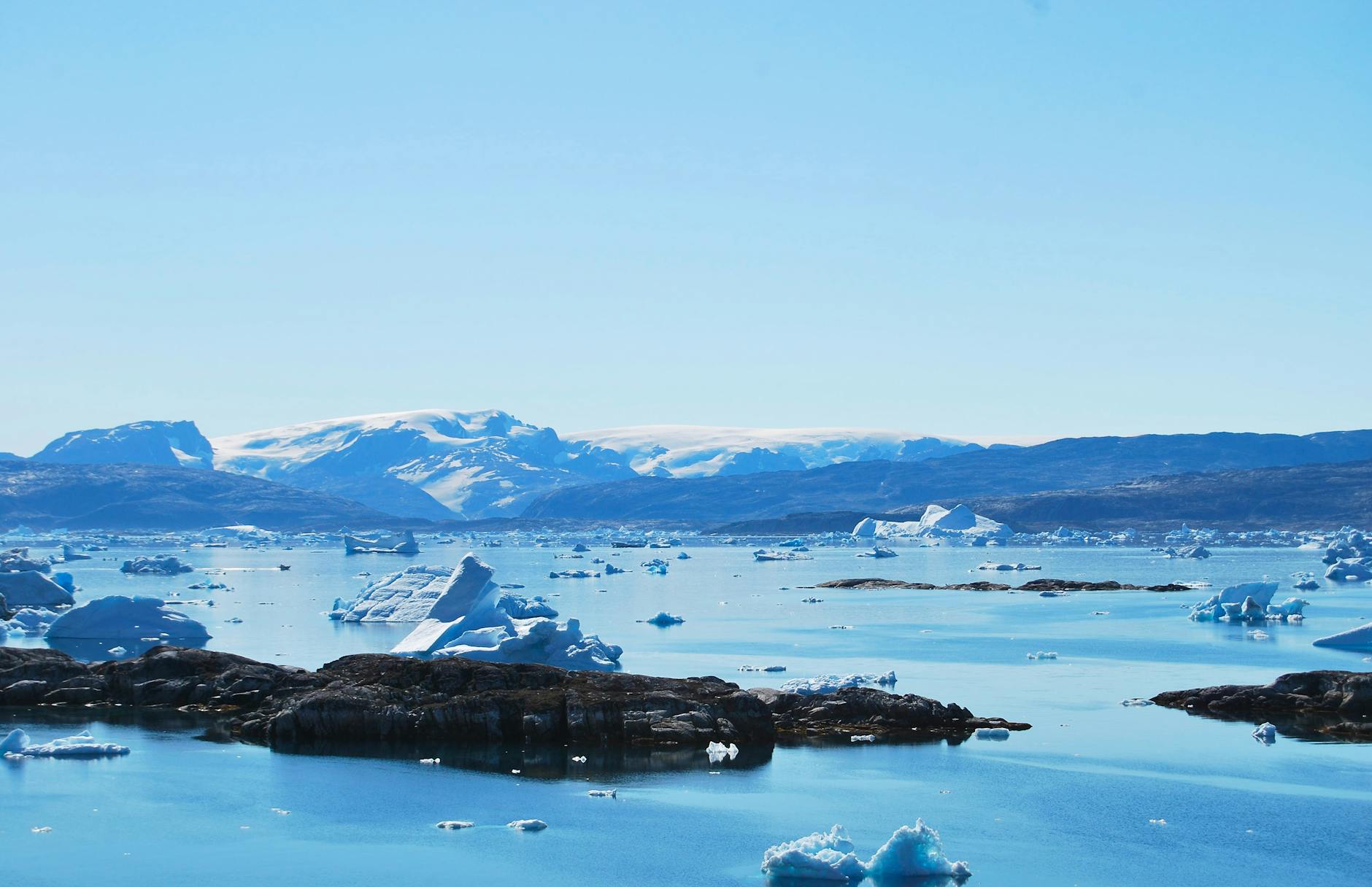
The phenomenon of nomadic polar bears meandering across the land is occurring elsewhere in the Arctic Circle too, in places such as Canada, and man-made things such as open rubbish dumps are attracting the famished predators as they struggle to find their usual sustenance on rapidly diminishing sea ice.
Roaming bands of polar bears visiting isolated villages in the dead of the Arctic night in search of morsels is a nightmarish scenario and one that would probably be commissioned by Hollywood’s horror department*, but what is most striking about it is how capitalistic detachment from and disregard for the environment is to blame. As Tom Smith, a university professor in wildlife sciences observes in the article: “The overwhelming Western influence in the north has resulted in [throwaway] economies that never existed there… Those cultures never had a throwaway society, so the notion of having to secure garbage – that’s a new thing.”
The notion of the throwaway culture warping the vulnerable world around us reminded me of the recent work of my friend Paul Carroll, whose latest series Redd focuses on what disposable horror lies beneath the surface of waterways across Ireland. One imagines that Irish people would hesitate to dump rubbish in a river if, all of a sudden, a polar bear landed to their door.
Read the full BBC article on polar bears here.
Read about Paul Carroll’s work ‘Redd’ here.
* Wouldn’t you know? There is already a movie vaguely along these lines called ‘Unnatural‘ (also known as Maneater), starring Sherilyn Fenn (Twin Peaks) and James Remar (The Warriors, 48 Hrs) which came out in 2015
What I’m listening to this week
Grian Chatten – Fairlies
In the beer garden of Mr Bradley’s in Cork City, there are some murals of notable Irish musicians, commissioned by the pub’s owner, Denis. Rory Gallagher is there alongside Phil Lynott and Dolores O’Riordan, but the fourth figure might not be so readily recognisable. At least, he wasn’t to me. I had to ask Denis who it was and a couple of years later, his placement on the wall finally makes sense to me. Grian Chatten, the unmistakable voice of Fontaines DC, is one of Ireland’s best contemporary musicians and I’ve recently been listening to songs from his solo album Chaos for the Fly, in particular, the track ‘Fairlies’. Check it out.
Kean Kavanagh – A Cowboy Song
The shadowy genius of comedian Peter McGann recently led me to discover the music of Kean Kavanagh and I’ve found myself humming a few of his tunes on my cycle to six-a-side in the last few weeks. I’m still familiarising myself with Kavanagh’s work, but he is pals with the great Kojaque and they have put together a few sublime music videos lately (featuring McGann) that are both light-hearted reflections of rural Irish culture and unsettlingly dark – Culchie-cana, if you will. As well as ‘A Cowboy Song’ above, give ‘The Whistle‘ a listen.
 Nothing is written